Salt: A Story of Friendship in a Time of War
Helen Frost
Frances Foster Books (Farrar, Straus, and Giroux)
2013
Salt is a historical fiction verse novel--it's written in poetic form, but it is remarkably easy to read. Set at the beginning of the War of 1812, Salt chronicles the friendship of two boys: James, a white settler's son, and Anikwa, a Miami Native American's son. The two families have been friends for generations, but the white family lives just outside the American fort. When tensions rise between the French and the Americans, and the Indians are forced to choose sides, the two boys are caught in the middle.
Frost enjoys writing poetry in distinctive forms. Diamond Willow was written in diamond-shaped poems with one word in each line typed in bold to form a different message. In Salt, Frost uses a two-pronged approach to reinforce the differences in the two boys and in their cultures. James speaks in unrhymed couplets that look like stripes across the page. They are, in fact, supposed to look like stripes: the stripes in the American flag. Anikwa speaks in poetry shaped liked the weaving patterns from his culture's blankets.
The two boys struggle to understand each other in the midst of the turmoil surrounding their families. Misunderstandings are inevitable, and the two families must figure out how to continue to be friends--or if it's worth continuing to trust one another. The characters are nuanced, the many issues surrounding war time are
present without taking over the boy's friendship, and the ending is
perfect. If you've never read a novel-in-verse, this is a good one to
try!
Frost includes good end notes on the history of the time period in question as well as cultural notes for Anikwa's people and how she came up with her characters' names.
Recommended for middle grades and up.
Book from my local library; cover image from publisher's website
Showing posts with label Historical Fiction. Show all posts
Monday, November 11, 2013
Monday, September 16, 2013
Mister Max: The Book of Lost Things
Mister Max: The Book of Lost Things (Mister Max, Book 1)
Cynthia Voigt
Iacopo Bruno, illustrator
Knopf, 2013
Voigt is a well known author, to be sure (especially for her Tillerman books--Dicey's Song was a Newbery winner from back in the day). She also won the Margaret A. Edwards award in 1995 (for lifetime achievement). And yet, we haven't heard much from her in recent years.
There's no question that Voigt can write, and write well at that. On the surface, her latest book seemed tailor made for me: I love a good mystery. I enjoy historic time periods and settings. I relish a good, open ending. Quirky characters, a dog, some art, the life of the theater--what's not to like?
When the book opens, Max's parents--both actors and owners of the Starling Theater Company--are planning a monumental trip to India. Max gets to go along. Until the day his parents board the boat and the boat leaves...without him. But, because Max is a quick thinker, he soon finds out that the boat they were supposed to board didn't exist. Therefore, did the whole trip exist? Are his parents in trouble? Did they know about this ahead of time? Is this an elaborate game or some nefarious plot? The reader doesn't know either, and we spend the next several hundred pages working on this mystery along with Max.
Thankfully, Max's grandmother lives close by, so he's not completely alone at the tender age of 12. He also has his painting instructor, a new tutor, and a new spunky girl to help him make sense of life and survive. And survive he does through his newly created "Mister Max" business: he solves minor mysteries for hire. Each time Max shows up for a new job, he's crafted a new disguise using his parents' many costumes. Thus, no one knows it's really a twelve year old boy underneath.
By the end of the book, we've learned a lot about Max and his parents (including where they are, although not how/why they got there), and Max has helped long lost lovers reunite, his painting instructor discover a new technique, and made some good friends. We're nicely set up, too, for the next book in the series.
And yet... Frankly, this book was too long. I finished it several weeks ago and am still mulling over just what didn't work. I enjoyed the characterization both of Max and the supporting cast. I enjoyed the overall dramatic framework of the book ("Act I"). But the length of the book draws out the mystery surrounding the parents' disappearance a little too long. We're bored with where his parents might be by the end and are much more invested in the here and now with Max and his new friends.
Age recommendation: 9-12/middle grades
Cover image from publisher
Thanks to publisher via netgalley for ARC!
Cynthia Voigt
Iacopo Bruno, illustrator
Knopf, 2013
Voigt is a well known author, to be sure (especially for her Tillerman books--Dicey's Song was a Newbery winner from back in the day). She also won the Margaret A. Edwards award in 1995 (for lifetime achievement). And yet, we haven't heard much from her in recent years.
There's no question that Voigt can write, and write well at that. On the surface, her latest book seemed tailor made for me: I love a good mystery. I enjoy historic time periods and settings. I relish a good, open ending. Quirky characters, a dog, some art, the life of the theater--what's not to like?
When the book opens, Max's parents--both actors and owners of the Starling Theater Company--are planning a monumental trip to India. Max gets to go along. Until the day his parents board the boat and the boat leaves...without him. But, because Max is a quick thinker, he soon finds out that the boat they were supposed to board didn't exist. Therefore, did the whole trip exist? Are his parents in trouble? Did they know about this ahead of time? Is this an elaborate game or some nefarious plot? The reader doesn't know either, and we spend the next several hundred pages working on this mystery along with Max.
Thankfully, Max's grandmother lives close by, so he's not completely alone at the tender age of 12. He also has his painting instructor, a new tutor, and a new spunky girl to help him make sense of life and survive. And survive he does through his newly created "Mister Max" business: he solves minor mysteries for hire. Each time Max shows up for a new job, he's crafted a new disguise using his parents' many costumes. Thus, no one knows it's really a twelve year old boy underneath.
By the end of the book, we've learned a lot about Max and his parents (including where they are, although not how/why they got there), and Max has helped long lost lovers reunite, his painting instructor discover a new technique, and made some good friends. We're nicely set up, too, for the next book in the series.
And yet... Frankly, this book was too long. I finished it several weeks ago and am still mulling over just what didn't work. I enjoyed the characterization both of Max and the supporting cast. I enjoyed the overall dramatic framework of the book ("Act I"). But the length of the book draws out the mystery surrounding the parents' disappearance a little too long. We're bored with where his parents might be by the end and are much more invested in the here and now with Max and his new friends.
Age recommendation: 9-12/middle grades
Cover image from publisher
Thanks to publisher via netgalley for ARC!
Labels:
Adventure,
ARC,
Boy Protagonist(s),
Historical Fiction,
Middle Grades,
Mystery
Monday, March 4, 2013
Finding Zasha: another great boy + dog story
Finding Zasha
Randi Barrow
Scholastic, 2013
Finding Zasha is a prequel to the popular Saving Zasha. I never read Saving Zasha, so I read Finding Zasha "cold" with no pre-existing ideas. And I thoroughly enjoyed it. I'm a sucker for good boy + dog stories, and in this case, it's boy + 2 dogs + Russia during WWII.
When the story opens, 12-year-old Ivan is living with his mother in an apartment in Leningrad as the famous siege of Leningrad begins. Ivan and his older neighbor (an "aunt") flee the city on a dangerous journey which involved crossing a iced-over river, catching a ride with a stranger, and showing up unannounced at a distant relative's house. Once they arrive in their new rural town, Ivan quickly makes friends with the local resistance fighters and joins them--none too soon, it turns out, because the Germans are moving in quickly. Ivan ends up getting chosen by the brutal commander of this particular German force--Axel--to play music for him and to train Axel's two adorable German Shepherd puppies.
I won't give away the rest of the book. Suffice it to say that Ivan forms a tremendous bond with his two canine charges, hatches a daring escape plan for them and him both (and other resistance fighters), endures another harrowing journey across unforgiving winter Russia, and... you'll just have to read it! Those who enjoyed the first Zasha book will enjoy this one. This one ends on a cliff hanger--which makes sense if you've read the first book, but which I had to do a little research about since I haven't read the first book.
Zasha is a bit too long for my tastes and will challenge some early middle school students. Still it's a good fit for the middle grades age group.
Truth and Story: This is a very engaging story, but the Truth aspects were a little off to me. From what I understand of Russia, the time period, and any group of people in wartime, I though it noteworthy that there was scant mention of religion of any sort. It doesn't "ruin" the story, but I noticed. Still, it provides a good picture of a boy hero, a brave group standing together at great risk, and what wartime can do to people.
Finding Zasha should be on shelves in bookstores now and will no doubt follow soon to library shelves.
ARC from netgalley; cover image from goodreads
Randi Barrow
Scholastic, 2013
Finding Zasha is a prequel to the popular Saving Zasha. I never read Saving Zasha, so I read Finding Zasha "cold" with no pre-existing ideas. And I thoroughly enjoyed it. I'm a sucker for good boy + dog stories, and in this case, it's boy + 2 dogs + Russia during WWII.
When the story opens, 12-year-old Ivan is living with his mother in an apartment in Leningrad as the famous siege of Leningrad begins. Ivan and his older neighbor (an "aunt") flee the city on a dangerous journey which involved crossing a iced-over river, catching a ride with a stranger, and showing up unannounced at a distant relative's house. Once they arrive in their new rural town, Ivan quickly makes friends with the local resistance fighters and joins them--none too soon, it turns out, because the Germans are moving in quickly. Ivan ends up getting chosen by the brutal commander of this particular German force--Axel--to play music for him and to train Axel's two adorable German Shepherd puppies.
I won't give away the rest of the book. Suffice it to say that Ivan forms a tremendous bond with his two canine charges, hatches a daring escape plan for them and him both (and other resistance fighters), endures another harrowing journey across unforgiving winter Russia, and... you'll just have to read it! Those who enjoyed the first Zasha book will enjoy this one. This one ends on a cliff hanger--which makes sense if you've read the first book, but which I had to do a little research about since I haven't read the first book.
Zasha is a bit too long for my tastes and will challenge some early middle school students. Still it's a good fit for the middle grades age group.
Truth and Story: This is a very engaging story, but the Truth aspects were a little off to me. From what I understand of Russia, the time period, and any group of people in wartime, I though it noteworthy that there was scant mention of religion of any sort. It doesn't "ruin" the story, but I noticed. Still, it provides a good picture of a boy hero, a brave group standing together at great risk, and what wartime can do to people.
Finding Zasha should be on shelves in bookstores now and will no doubt follow soon to library shelves.
ARC from netgalley; cover image from goodreads
Monday, February 18, 2013
Honest Abe
President's Day celebrates, in part, the birthdays of both Abraham Lincoln and George Washington. There have been loads of books for kids published about Abraham Lincoln, in particular, so in honor of his recent birthday and today's President's Day, here are some solid reads about Honest Abe. I've given the first title more description since it's just out this spring and won't be as well known. (For a couple of other Lincoln books, see Emily's post at Redeemed Reader.)
Lincoln's Grave Robbers
Steve Sheinkin
Scholastic, 2013
Hitting store shelves this spring is Sheinkin's latest fascinating peak into history (Sheinkin is author of the recent heavily-awarded Bomb). True to Sheinkin's reputation, Lincoln's Grave Robbers is fast-paced and reveals some little remembered historical facts along with a fantastic attempt by some men to actually steal Lincoln's bones! Crazy.
The story opens with an examination of the widespread counterfeit operations going on during the second half of the 19th century (it's amazing how much money in circulation was fake!!). Did you know the Secret Service was started for the specific purpose of tracking down counterfeit money folks (from the engravers to those passing it in the street). When a highly skilled engraver gets put behind bars, the folks who depended on his next-to-impossible-to-detect counterfeit bills panic. What can they do to get him back? I know! Steal Lincoln's bones! That will teach that mean government who's boss. They don't put it in those words, but that's the sentiment behind this desperate plot to steal Lincoln's bones and essentially demand the engraver in return for the bones. Thanks to a "rover" (a "mole" in today's parlance), their plot is hindered--but the Secret Service men fail to capture the bad guys! A series of small things-gone-wrong drags the story out, but justice is finally served.
Kids will enjoy this peak into a part of history often left out of the history books. Sheinkin's gift for narration keeps the story moving, and he continues his usual well-balanced musings (wondering who's "fault" some things are, for instance). He also does an excellent job of sprinkling in historical slang without making the book obscure. All in all, a fun and informative read. Recommended for 4th grade and up (this one is not as complex as Bomb).
Abraham Lincoln and Frederick Douglass: the Story Behind an American Friendship
Russell Freedman
Houghton Mifflin Harcourt, 2012
Thoughtfully reviewed by Janie over at Redeemed Reader, this book is essentially a dual biography from a well known and awarded author. Freedman is no stranger to Lincoln, and his name will come up in this list again! Worth checking out for those middle grades students.
Lincoln: a Photobiography
Russell Freedman
Sandpiper, 1989 (originally published 1987)
Newbery Medal
Freedman's earlier biography of Lincoln was a landmark book in children's publishing. His blend of photography with text was remarkable, and it's one of the few nonfiction titles to ever win a Newbery Medal (this year, 2013, Sheinkin's Bomb garnered an honor). Comprehensive, well documented, this book is a standard among biographies for the middle grades set.
Abraham Lincoln
Ingri and Edgar Parin D'Aulaire
Doubleday, 1939
Caldecott Medal
Another noteworthy book about Lincoln that also was a landmark book in terms of awards--one of the first Caldecott winners and in color! The D'Aulaires are standards in the field for children's biographies and their adaptations of things like the Greek Myths for children. This biography is accessible to elementary school children, does a nice job of bringing Lincoln's character (including his funny side) to life, and gives a thorough look at Lincoln's childhood and young adulthood.
Thanks to my local library for all books save Lincoln's Grave Robbers which I received via netgalley; cover images from goodreads.
Lincoln's Grave Robbers
Steve Sheinkin
Scholastic, 2013
Hitting store shelves this spring is Sheinkin's latest fascinating peak into history (Sheinkin is author of the recent heavily-awarded Bomb). True to Sheinkin's reputation, Lincoln's Grave Robbers is fast-paced and reveals some little remembered historical facts along with a fantastic attempt by some men to actually steal Lincoln's bones! Crazy.
The story opens with an examination of the widespread counterfeit operations going on during the second half of the 19th century (it's amazing how much money in circulation was fake!!). Did you know the Secret Service was started for the specific purpose of tracking down counterfeit money folks (from the engravers to those passing it in the street). When a highly skilled engraver gets put behind bars, the folks who depended on his next-to-impossible-to-detect counterfeit bills panic. What can they do to get him back? I know! Steal Lincoln's bones! That will teach that mean government who's boss. They don't put it in those words, but that's the sentiment behind this desperate plot to steal Lincoln's bones and essentially demand the engraver in return for the bones. Thanks to a "rover" (a "mole" in today's parlance), their plot is hindered--but the Secret Service men fail to capture the bad guys! A series of small things-gone-wrong drags the story out, but justice is finally served.
Kids will enjoy this peak into a part of history often left out of the history books. Sheinkin's gift for narration keeps the story moving, and he continues his usual well-balanced musings (wondering who's "fault" some things are, for instance). He also does an excellent job of sprinkling in historical slang without making the book obscure. All in all, a fun and informative read. Recommended for 4th grade and up (this one is not as complex as Bomb).
Abraham Lincoln and Frederick Douglass: the Story Behind an American Friendship
Russell Freedman
Houghton Mifflin Harcourt, 2012
Thoughtfully reviewed by Janie over at Redeemed Reader, this book is essentially a dual biography from a well known and awarded author. Freedman is no stranger to Lincoln, and his name will come up in this list again! Worth checking out for those middle grades students.
Lincoln: a Photobiography
Russell Freedman
Sandpiper, 1989 (originally published 1987)
Newbery Medal
Freedman's earlier biography of Lincoln was a landmark book in children's publishing. His blend of photography with text was remarkable, and it's one of the few nonfiction titles to ever win a Newbery Medal (this year, 2013, Sheinkin's Bomb garnered an honor). Comprehensive, well documented, this book is a standard among biographies for the middle grades set.
Abraham Lincoln
Ingri and Edgar Parin D'Aulaire
Doubleday, 1939
Caldecott Medal
Another noteworthy book about Lincoln that also was a landmark book in terms of awards--one of the first Caldecott winners and in color! The D'Aulaires are standards in the field for children's biographies and their adaptations of things like the Greek Myths for children. This biography is accessible to elementary school children, does a nice job of bringing Lincoln's character (including his funny side) to life, and gives a thorough look at Lincoln's childhood and young adulthood.
Thanks to my local library for all books save Lincoln's Grave Robbers which I received via netgalley; cover images from goodreads.
Tuesday, February 5, 2013
Hattie Ever After
Hattie Ever After
Kirby Larson
Delacorte Press, 2013
Truly noteworthy books aren't judged just as a successor to the previous book; they're judged on their "stand alone" merits. As in, could this book be a great book without its predecessor (Hattie Big Sky, a 2007 Newbery Honor). In Hattie's case, most definitely yes!
How do I know this? I read Hattie Ever After "cold" from netgalley in ARC form. By "cold," I mean that I haven't read Hattie Big Sky. Now, however, Hattie Big Sky has just moved much higher in the TBR pile!
Hattie's character and voice are so genuine and warm; she's the kind of book character you are drawn to and feel sort of nostalgic on behalf of. Many people have this same sort of artificial nostalgia for Laura Ingalls and her time period. Hattie Ever After brings us to the early 20th century when women are struggling with the return to the domestic homefront after helping out professionally with the war effort. This tension is dealt with well in Hattie Ever After. The importance of human relationships--especially marriage--comes through alongside the understandable interest, for young women like Hattie, in pursuing a career dream (in her case, newspaper reporting).
I really enjoyed the setting, the characters, the pacing, the plot in this little gem. I really, really liked the ending--a very appropriate balance of authenticity for the time period with Hattie's career aspirations. Historical details were thrown in naturally (such as Hattie gazing up the at the "large" 10-story newspaper building), worked into letters, and communicated effortlessly in conversations. The ending was a bit predictable, but that didn't spoil the book for me. All in all, a great read and a sweet love story just in time for Valentine's Day!
Recommended for middle grades and up; look for this book in local bookstores in mid-February and in libraries shortly thereafter! (you can always request your local library to purchase a book!)
Cover image from goodreads; ARC/book thanks to Delacorte via netgalley
Kirby Larson
Delacorte Press, 2013
Truly noteworthy books aren't judged just as a successor to the previous book; they're judged on their "stand alone" merits. As in, could this book be a great book without its predecessor (Hattie Big Sky, a 2007 Newbery Honor). In Hattie's case, most definitely yes!
How do I know this? I read Hattie Ever After "cold" from netgalley in ARC form. By "cold," I mean that I haven't read Hattie Big Sky. Now, however, Hattie Big Sky has just moved much higher in the TBR pile!
Hattie's character and voice are so genuine and warm; she's the kind of book character you are drawn to and feel sort of nostalgic on behalf of. Many people have this same sort of artificial nostalgia for Laura Ingalls and her time period. Hattie Ever After brings us to the early 20th century when women are struggling with the return to the domestic homefront after helping out professionally with the war effort. This tension is dealt with well in Hattie Ever After. The importance of human relationships--especially marriage--comes through alongside the understandable interest, for young women like Hattie, in pursuing a career dream (in her case, newspaper reporting).
I really enjoyed the setting, the characters, the pacing, the plot in this little gem. I really, really liked the ending--a very appropriate balance of authenticity for the time period with Hattie's career aspirations. Historical details were thrown in naturally (such as Hattie gazing up the at the "large" 10-story newspaper building), worked into letters, and communicated effortlessly in conversations. The ending was a bit predictable, but that didn't spoil the book for me. All in all, a great read and a sweet love story just in time for Valentine's Day!
Recommended for middle grades and up; look for this book in local bookstores in mid-February and in libraries shortly thereafter! (you can always request your local library to purchase a book!)
Cover image from goodreads; ARC/book thanks to Delacorte via netgalley
Labels:
ARC,
Girl Protagonist(s),
Historical Fiction,
Middle Grades,
Young Adult
Tuesday, January 1, 2013
Navigating Early
Navigating Early
Clare Vanderpool
Random House
2013
My birthday (Jan 8) this year is a popular release date for the first batch of middle grade novels--if the three I've read are any indication! And not just any ol' bunch of middle grade novels... these are by big time folks. Vanderpool's name might not mean much to our Literaritea readers, but her first middle grade novel won that little Newbery award a couple of years back (Moon Over Manifest). Yes, indeed. And any time a former Newbery winner releases another book, you better believe we jump on it. So I did. And Random House kindly let me read it in ARC form (thanks RH!).
When I read an Advanced Reader Copy, I frequently jump into the book "cold." That is, I know little to nothing of the plot, see no other praise/comments such as might appear on the book cover, and frequently don't see a cover (or a poor image of one). Thus, I enter the reading experience with no preconceptions except those based on my previous reading of the same author's works. Definitely true in the case of Navigating Early. I didn't even know how long it was because I was too lazy to scan the small font on the first ARC page that would have told me that info.
I wasn't wowed by Moon Over Manifest, I'll be honest. Navigating Early is a much stronger work in my opinion. Another historical fiction work, this time set just at the end of WWII in a boys' boarding school in Maine, Navigating Early follows one boy's journey to come to grips with his mother's death and his father's seeming unconcern for him. In the process, he meets the unique Early Auden, goes on a fantastical voyage that weaves in and out of the mythic story of Pi (including the discovery of further numbers), and helps bring closure to more than one person in Early's famous family.
If Early Auden were living today, we would diagnose him somewhere on the autism spectrum--probably Asberger's. I really like that he is NOT diagnosed in this book (he wouldn't have been labeled in the WWII time period either). I think this adds to his character significantly. We want to label people in so many ways; isn't it better to befriend them and learn from them regardless of what label they might carry? Jack learns that Early is a true friend. And Jack learns how to be a friend back.
Early teaches Jack many things on their voyage to find the giant bear, to follow Pi's journey, and to complete their quest. What Jack doesn't know is that Early's absolute conviction of his brother's survival from war (against ALL official evidence), his knowledge of the mathematical intricacies involved in the number Pi, and his childlike faith in the details he notices are all true--even though the casual observer would never believe it. Early notices myriad details that others miss, perhaps because he's not so caught up in the social issues that bog most folks down. Part magical realism, part quest, and all friendship, this story works for me better than Moon Over Manifest. It's a touch too long and struggles a bit with the voice--sounds more like an adult narrating than Jack many times. Still, it's worth reading, and I think many sensitive young readers will enjoy this one.
Clare Vanderpool
Random House
2013
My birthday (Jan 8) this year is a popular release date for the first batch of middle grade novels--if the three I've read are any indication! And not just any ol' bunch of middle grade novels... these are by big time folks. Vanderpool's name might not mean much to our Literaritea readers, but her first middle grade novel won that little Newbery award a couple of years back (Moon Over Manifest). Yes, indeed. And any time a former Newbery winner releases another book, you better believe we jump on it. So I did. And Random House kindly let me read it in ARC form (thanks RH!).
When I read an Advanced Reader Copy, I frequently jump into the book "cold." That is, I know little to nothing of the plot, see no other praise/comments such as might appear on the book cover, and frequently don't see a cover (or a poor image of one). Thus, I enter the reading experience with no preconceptions except those based on my previous reading of the same author's works. Definitely true in the case of Navigating Early. I didn't even know how long it was because I was too lazy to scan the small font on the first ARC page that would have told me that info.
I wasn't wowed by Moon Over Manifest, I'll be honest. Navigating Early is a much stronger work in my opinion. Another historical fiction work, this time set just at the end of WWII in a boys' boarding school in Maine, Navigating Early follows one boy's journey to come to grips with his mother's death and his father's seeming unconcern for him. In the process, he meets the unique Early Auden, goes on a fantastical voyage that weaves in and out of the mythic story of Pi (including the discovery of further numbers), and helps bring closure to more than one person in Early's famous family.
If Early Auden were living today, we would diagnose him somewhere on the autism spectrum--probably Asberger's. I really like that he is NOT diagnosed in this book (he wouldn't have been labeled in the WWII time period either). I think this adds to his character significantly. We want to label people in so many ways; isn't it better to befriend them and learn from them regardless of what label they might carry? Jack learns that Early is a true friend. And Jack learns how to be a friend back.
Early teaches Jack many things on their voyage to find the giant bear, to follow Pi's journey, and to complete their quest. What Jack doesn't know is that Early's absolute conviction of his brother's survival from war (against ALL official evidence), his knowledge of the mathematical intricacies involved in the number Pi, and his childlike faith in the details he notices are all true--even though the casual observer would never believe it. Early notices myriad details that others miss, perhaps because he's not so caught up in the social issues that bog most folks down. Part magical realism, part quest, and all friendship, this story works for me better than Moon Over Manifest. It's a touch too long and struggles a bit with the voice--sounds more like an adult narrating than Jack many times. Still, it's worth reading, and I think many sensitive young readers will enjoy this one.
Labels:
Adventure,
ARC,
Boy Protagonist(s),
Historical Fiction,
Middle Grades
Tuesday, December 11, 2012
Lizzie Bright and the Buckminster Boy
Gary D. Schmidt
Clarion
2004
Newbery Honor; Printz Honor
This is an excellent book! As you might surmise from those award stickers on the cover, I'm not the only one who thinks so. Historical fiction is Schmidt's strong suit; this particular book takes place in Maine in 1912 and centers on the white Buckminster Boy (Turner) and the black Lizzie Bright. Turner and Lizzie also represent town and country (island in this case), establishment and fringe, the way-it's-always-been and the way-it-should-and-could-be. All of this potential conflict set in a small town that's slowly dying as it faces the end of the industry that's kept it alive.
Turner grows up in this book. He makes hard decisions, stands up for what he believes is right, and watches those "right" decisions still not end happily all the time. A pitch perfect book for the 12-14 crowd, this is a book that raises great questions. Schmidt's biblical allusions are an added treat for those steeped in biblical literacy; his characterization is especially well done in this novel.
Things to Note/Discuss
Gary D. Schmidt
Clarion
2004
Newbery Honor; Printz Honor
This is an excellent book! As you might surmise from those award stickers on the cover, I'm not the only one who thinks so. Historical fiction is Schmidt's strong suit; this particular book takes place in Maine in 1912 and centers on the white Buckminster Boy (Turner) and the black Lizzie Bright. Turner and Lizzie also represent town and country (island in this case), establishment and fringe, the way-it's-always-been and the way-it-should-and-could-be. All of this potential conflict set in a small town that's slowly dying as it faces the end of the industry that's kept it alive.
Turner grows up in this book. He makes hard decisions, stands up for what he believes is right, and watches those "right" decisions still not end happily all the time. A pitch perfect book for the 12-14 crowd, this is a book that raises great questions. Schmidt's biblical allusions are an added treat for those steeped in biblical literacy; his characterization is especially well done in this novel.
Things to Note/Discuss
- When is it okay to stand up to a parent?
- Are there decisions that Turner made that you feel are particularly noteworthy? Were there any you disagreed with or thought foolish?
- What do you think Turner's father should have done in regards to the island (Malaga) and its people?
- Any thoughts on looking a whale in its eye?
Monday, December 10, 2012
Trouble by Gary Schmidt: a Teabag Review
It's no secret that Megan and I enjoy a good cup of tea. So, in honor of our tea appreciation, I'm introducing a new review style: a teabag-sized review. You might consider our normal reviews to be a cup of tea to savor; a teabag is the short and sweet alternative, similar in length to a title's discussion in a weekly round-up but which appears all by its lonesome. Sometimes, we just want to let you know a book is out there! So, without further ado, here's a teabag-sized review of Trouble by Gary Schmidt.
Trouble
Gary D. Schmidt
Clarion, 2008
Trouble takes place near Trouble (a location) and involves heaps of trouble in the lives of young Henry, his family, and a Cambodian named Chay. Schmidt's gift for description, intricate plotting, and terrific characterization come into play, as does his frequent treatment of a young person turning his/her face to adulthood--with all the drama and coming-of-age that implies. This is a book for an older audience than Schmidt's Okay for Now and The Wednesday Wars; I'd even say it's for an older audience than Lizzie Bright and the Buckminster Boy. Issues that crop up include racism, guilt/innocence, family relations, friendship. A touch long, in my opinion, and therefore a touch slow, this book is still a good read and one to provoke much thought.
Trouble
Gary D. Schmidt
Clarion, 2008
Trouble takes place near Trouble (a location) and involves heaps of trouble in the lives of young Henry, his family, and a Cambodian named Chay. Schmidt's gift for description, intricate plotting, and terrific characterization come into play, as does his frequent treatment of a young person turning his/her face to adulthood--with all the drama and coming-of-age that implies. This is a book for an older audience than Schmidt's Okay for Now and The Wednesday Wars; I'd even say it's for an older audience than Lizzie Bright and the Buckminster Boy. Issues that crop up include racism, guilt/innocence, family relations, friendship. A touch long, in my opinion, and therefore a touch slow, this book is still a good read and one to provoke much thought.
Thursday, October 18, 2012
The Golden Goblet (Retro Reads)
The Golden Goblet
Eloise Jarvis McGraw
Puffin
1961
Newbery Honor Book
The Golden Goblet is an older book that might be easy to overlook--but don't pass it by! Set in ancient Egypt, The Golden Goblet tells the story of young Ranofer, an orphan who desperately wants to be a goldsmith. It's not that he doesn't have talent; no, it's that his stepbrother (Gebu) is cruel and refuses to pay to apprentice him to a goldsmith. In fact, Ranofer is a lowly worker in a goldsmith's shop until he discovers Gebu's thievery. Once the deception is brought to the attention of the goldsmith, Ranofer is sent to work in the stonecutter's shop--a job that poses risk of harm to Ranofer's skilled artisan fingers in addition to its other hardships.
Eloise Jarvis McGraw
Puffin
1961
Newbery Honor Book
The Golden Goblet is an older book that might be easy to overlook--but don't pass it by! Set in ancient Egypt, The Golden Goblet tells the story of young Ranofer, an orphan who desperately wants to be a goldsmith. It's not that he doesn't have talent; no, it's that his stepbrother (Gebu) is cruel and refuses to pay to apprentice him to a goldsmith. In fact, Ranofer is a lowly worker in a goldsmith's shop until he discovers Gebu's thievery. Once the deception is brought to the attention of the goldsmith, Ranofer is sent to work in the stonecutter's shop--a job that poses risk of harm to Ranofer's skilled artisan fingers in addition to its other hardships.
Tuesday, October 2, 2012
Bright Island (Retro Reads!)
Bright Island
Mabel Robinson
Random House
2012 (re-issue of 1937 copy)
Newbery Honor
I really appreciate it when publishers re-issue older books. The market isn't as wide, no doubt, for these old-fashioned favorites, but they're worth reading and keeping in print. Bright Island is a great example; the 75th anniversary edition hits stores this month.
One of my favorite books growing up was Ruth Sawyer's Roller Skates (another 1930's Newbery title); Bright Island reminds me of that same type of old-fashioned fiction. It's historical fiction now, but was written as a contemporary title. Thus, it's a great picture into another world. In Bright Island, our heroine, one Thankful Curtis, has grown up island bound and can sail as good as anyone. She can do just about anything she puts her mind to, and has no intention of putting her mind to going to school on the mainland. Homeschooled all her life by her capable mother (of Scots descent!), Thankful does indeed end up finishing school at an elite boarding school on the mainland despite her dread.
Wednesday, August 8, 2012
7 Books, 7 Girls, 7 Histories
It's time for school again! I don't know about you, but I learned next to nothing of 20th century American history in school. We barely made it to the World Wars, cruised through those, nodded at the Great Depression, and mentioned the horrors of the Holocaust. And there it ended.
Thankfully, contemporary children's and young adult authors are writing some solid historical fiction that takes place during various 20th century eras. The seven books below all offer terrific windows into their respective time periods, are perfect for the 10-12 year old crowd (and the mature 9-year-old), and all have been published since the year 2000 (and all are available in my local library). They are not "light" reads--mostly due to length; reluctant readers may need some coaxing. But all are worth reading--particularly if you need a bit more understanding of one of the time periods in question. Keep these in mind this school year.
Each book below follows the standard middle grades plot/theme:
All also are humanistic: during times of great struggle/stress/crisis, the human spirit rises to the occasion, the people band together, and all is okay. Worth noting, especially for those of you wishing to impart a more theologically centered view of history; still, these are excellent portrayals of their various eras and worth reading (and discussing--see below!).
Arranged in order of time period covered.
Thankfully, contemporary children's and young adult authors are writing some solid historical fiction that takes place during various 20th century eras. The seven books below all offer terrific windows into their respective time periods, are perfect for the 10-12 year old crowd (and the mature 9-year-old), and all have been published since the year 2000 (and all are available in my local library). They are not "light" reads--mostly due to length; reluctant readers may need some coaxing. But all are worth reading--particularly if you need a bit more understanding of one of the time periods in question. Keep these in mind this school year.
Each book below follows the standard middle grades plot/theme:
- 10-12 year old protagonist (girls, in this case) learns to accept herself,
- learns to love her family even when they embarrass her,
- learns how to be a true friend,
- begins to wrestle with prejudice/seeing world from other perspectives,
- learns that her parents are real people,
- and emerges at the end of the book a stronger girl than at the beginning.
All also are humanistic: during times of great struggle/stress/crisis, the human spirit rises to the occasion, the people band together, and all is okay. Worth noting, especially for those of you wishing to impart a more theologically centered view of history; still, these are excellent portrayals of their various eras and worth reading (and discussing--see below!).
Arranged in order of time period covered.
Tuesday, July 31, 2012
Flygirl
Flygirl
Sherri L. Smith
Putnam's
2008
I thoroughly enjoyed this book. Every last part of it. If you're looking for a great coming-of-age story, a story which deals with a seldom discussed racial issue, a story that shows an oft overlooked part of history, a story with a winsome and believable main character, a story with a hint of romance, a story with lots of adventure, a story with flying and military history--then this is the book for you!
Thursday, July 26, 2012
Truth and Story in The Scarlet Pimpernel
(**Warning: spoiler to the Scarlet Pimpernel revealed!**)
Friday night we watched The Scarlet Pimpernel, a 1982 movie (featuring Anthony Andrews and Jane Seymour) based on the classic by Baroness Orczy. We had hoped for some good sword fighting and heroic exploits, but as the story progressed, we began to wonder how much our boys would understand about the French reign of terror and the non-graphically depicted guillotine activity.
What bothered my 5-year-old the most was when the Scarlet Pimpernel was led out to be executed by the firing squad while his wife and her brother waited with the villain inside. Since I had read the book and my husband and I had seen the movie some years ago we knew everything would be all right, but how do you convince a little boy who is being carried along by what he sees? Only when Percy reappeared to declare his victory was my son somewhat reassured, but at the end he still expressed his strong preference for the Daffy Duck version of the Scarlet Pumpernickel. We sincerely apologized to him, because we certainly had no intention of upsetting him--but we had known the ending!
As I snuggled our boys in bed, I whispered to them of the cross. “Sweetheart,” I said, “in a story, who is in charge of how things turn out, the author or the character? The author. And who is in charge of the story we’re in? It’s Jesus! The story we are living is all about Him, and He is in charge of everything! When Jesus died on the cross, Satan thought he had triumphed, and was allowed a moment to think he had won—just like Percy, the Scarlet Pimpernel, allowed his enemy a mere moment to revel in his success. But really, Percy was in charge! Jesus was fully in control on the cross, and while Satan thought he had finally defeated God, really he was overwhelmingly conquered. And Jesus, who is both the author and the hero of the story we are living, is bringing us to a joyful ending where we will all live happily ever after, because isn’t that how all the best stories end? The Scarlet Pimpernel is just a little shadow pointing to Jesus Christ.”
What joy to point a little boy to our Hero, that when things seem darkest, it’s not over yet! Our Savior is still in the business of robbing prisons and rescuing His beloved from death sentences, and carrying His beloved home. A satisfying ending that points to the happy ending that awaits us.
Movie cover image from Cover Browser
Friday, June 15, 2012
The Wednesday Wars
The Wednesday Wars
Gary D. Schmidt
Houghton Mifflin Harcourt
2007
Newbery Honor
Gary D. Schmidt: the man can write. I have his Printz/Newbery Honor book Lizzie Bright and the Buckminster Boy on hold at the library and can't wait to read it. Sometimes it's hard to explain why an author's work is such a pleasure to read. For Schmidt, a few things stand out:
1. Characters: Even the despicable characters (like Holling's dad) are somewhat sympathetic because they're so human. And we feel, really feel, for the Vietnamese girl when she's picked on by people, can remember teachers and school personnel like those in the book, and cheer when Mrs. Baker gets good news about her husband.
2. Less is More: One of the things that sets the great writers apart from the good is the ability to communicate profoundly with few words. Or to resist sensationalizing bits or giving us too much information. For instance, when a grown up swears in this book, Holling might say something like "Mr. --- said, 'Oh.' (Only he didn't really say 'Oh' but it wasn't as good as Shakespeare's curses.)". He refers to his house as The Perfect House with the Perfect Living Room--we don't need to have Schmidt tell us that Holling's parents are trying to keep up appearances. Holling's title for the house sums it up nicely.
3. Voice: This story is so thoroughly from Holling's perspective that we don't even hear his sister named until near the end of the book... and we don't even realize it. She's simply "my sister." The lack of a name is no big deal. (Incidentally, this same thing happened in Okay for Now; in both books, the revelation of the sibling's name indicates the beginning of a new relationship. Subtle, yet profound and unmistakable. And it's a sudden wake up call to hear that sibling's name--the first time you really notice that you never knew his/her name before.)
4. Details: Oh, the details. We're in 1967-8 in this book, yet Schmidt slips in details like "dittoed" worksheets easily and without feeling the need to remind us just what that refers to. Schmidt knows his readers are smarter than that.
5. Complexity: Again, Schmidt is writing to intelligent folks. There is tremendous complexity in this book, layers of characterization, relationships, awakenings, plot, etc. The layers get slowly peeled away, and by the end, we're teary eyed...but in a good way. And we want to stand up and cheer for his protagonists.
6. Grit: Without wallowing in it, Schmidt still manages to communicate some tough stuff: Holling's dad is pretty much a business-comes-first-before-family-kind-of-guy. There are troubles between Holling's parents that come out subtly as the book progresses. Holling's sister runs away. There's a war going on and not everyone is on board with it. They are on board with bomb drills, though. And yet, Schmidt's books are hopeful and life-affirming; life is hard, but there is still hope.
7. Unifying Concept: In Okay for Now, Doug discovers a passion for art and drawing. This passion helps frame quite a bit of the book. For Holling, in The Wednesday Wars, Shakespeare becomes that same passion--albeit despite Holling's initial feelings. We learn some marvelous Shakespearean curses (my favorite being "Toads, beetles, bats!"), see plot developments through plot arcs from Shakespeare, gain insight into characters/relationships/emotions through Shakespearean similarities, and so forth. This is masterfully done and does not feel like Schmidt is trying to "teach" Shakespeare through the book. Rather, Shakespeare becomes the unifying concept, if you will. And this is because it becomes a unifying concept for Holling and we are seeing everything through Holling's eyes.
Recommended for middle grades (Holling's in 7th grade, actually, in the book)
Book from local library; cover image from goodreads
Wednesday, June 6, 2012
Weekly Round-up: the 1960s for Middle Grades
Times were a'changin' in the 1960s, no doubt about it. And a slew of recent noteworthy historical fiction novels have covered various aspects of this tumultuous time in our country's history; all of the titles below are geared more or less to the middle grades age bracket (5th-8th). I've found all of them in my local library; hopefully you will, too! (It's worth reminding folks of books like The Watsons Go to Birmingham, 1963 that are also good fits for this age group but were published pre-2000.)
Things to Note/Discuss: (these work for most of the books below)
Kristen Levine
2012
The year after the famous Little Rock Nine. Technically set in 1958, this book has enough relevance to the 1960s that I'm including it here. This is a solid historical fiction offering for the 6th-8th grade crowd, but it's a touch long. Girl protagonist. My friend Brandy wrote an excellent review, so I won't offer more details here.
Dead End in Norvelt
Jack Gantos
2011--Newbery Winner 2012
Small town, "ordinary life," with fear of Commies leaking through.This book won the coveted Newbery, but it's not my favorite of this lineup. Still, it's funny, features a boy protagonist, and isn't too caught up in "fiction for the sake of teaching great historical moments." I've reviewed it more in depth earlier this year. Due to length, primarily, this is probably for the 6th-8th grade audience.
Countdown
Deborah Wiles
2010
Cuban Missile Crisis. The format of this book sets it apart--scrapbook style featuring newspaper clippings, headlines, ads, etc. from the time period interspersed with chapters of the actual narrative. Girl protagonist who's a bit more "girly" than some of the others on this list. Appropriate for any of the middle grades; scrapbook style may make this an appealing read for reluctant readers.
Glory Be
Augusta Scattergood
2012
1960s small town Mississippi--the summer of the Freedom Riders. Girl protagonist who befriends a Yankee girl; the town pool has been closed because some white folks in the town want to keep it segregated.... The usual Civil Rights issues and tensions, but in a nice, readable story for the younger end of the middle grades spectrum (say, 4th-6th). 3rd graders might enjoy this, too.
One Crazy Summer
Rita Williams Garcia
2010; Newbery Honor, National Book Award Finalist, Scott O'Dell Award (for historical fiction), Coretta Scott King Award, etc.
1960s California and the Black Panthers. I'll admit it: I did NOT like this book. Still, it's won a slew of awards, is nice and short (which is getting hard to find), and is a solid historical fiction offering for the 4th-6th crowd. Girl protagonist.
Okay for Now
Gary Schmidt
2011; National Book Award Finalist
1960s "ordinary life" but the Vietnam War is definitely a part of Doug's experience as he navigates 8th grade in a new town. Companion novel to The Wednesday Wars, it has a slightly "older" feel--perhaps 7th-9th grade. Let me tell you, Schmidt can write. Wow. This book packs a punch and will be worth discussing. It's not always a "fun" read, but it's a GREAT one.

The Wednesday Wars
Gary Schmidt
2006; 2007 Newbery Honor
One of my faves, this book precedes Okay for Now, and features Holling (and OK4N's Doug as a supporting character) in the 7th grade; 1967-8 and the Vietnam War is overshadowing their normal middle school adventures. A nice Shakespearean touch in this one and FANTASTIC characters.
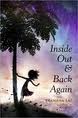
Inside Out and Back Again
Thanhha Lai
2011; 2012 Newbery Honor, National Book Award Winner
One of my all-time favorite middle grade novels, this is a novel in verse about a young girl who emigrates from Vietnam to the U.S. (Alabama, actually). Very readable, despite the "verse" element, it's also great for the younger half of the middle grades audience (4th-6th).
Book covers from goodreads
Things to Note/Discuss: (these work for most of the books below)
- as middle grade novels, all novels address a mild coming-of-age in the sense that the main character is learning to stand on his or her own two feet and beginning to see him/herself as separate from parental figures. Parents are still around, but the protagonist is beginning to see them a little more accurately--not merely as "mom" or "dad."
- All novels below celebrate the triumph of the human spirit and the role humans play in changing history. This is valid to a degree, but it's also important to recognize with your children that the Lord ultimately directs history.
- Unless noted below, these novels are middle grades (5th-8th) in terms of maturity of content, length of book/reading level, and issues faced. You might not want to hand some of these to your precocious 3rd grader.
- Most of these books explore the "biggies" of the 1960's (Communism scares, Cuban Missile Crisis, Civil Rights, Vietnam War)--much to discuss along those lines! In particular, many of these novels examine friendship across party/racial lines, the impact of prejudice on a community, fear (of violence, war, retaliation, etc.), and the question of "who do you trust" (including the gov't). Definitely worth discussing!
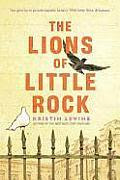
Kristen Levine
2012
The year after the famous Little Rock Nine. Technically set in 1958, this book has enough relevance to the 1960s that I'm including it here. This is a solid historical fiction offering for the 6th-8th grade crowd, but it's a touch long. Girl protagonist. My friend Brandy wrote an excellent review, so I won't offer more details here.
Dead End in Norvelt
Jack Gantos
2011--Newbery Winner 2012
Small town, "ordinary life," with fear of Commies leaking through.This book won the coveted Newbery, but it's not my favorite of this lineup. Still, it's funny, features a boy protagonist, and isn't too caught up in "fiction for the sake of teaching great historical moments." I've reviewed it more in depth earlier this year. Due to length, primarily, this is probably for the 6th-8th grade audience.
Countdown
Deborah Wiles
2010
Cuban Missile Crisis. The format of this book sets it apart--scrapbook style featuring newspaper clippings, headlines, ads, etc. from the time period interspersed with chapters of the actual narrative. Girl protagonist who's a bit more "girly" than some of the others on this list. Appropriate for any of the middle grades; scrapbook style may make this an appealing read for reluctant readers.
Glory BeAugusta Scattergood
2012
1960s small town Mississippi--the summer of the Freedom Riders. Girl protagonist who befriends a Yankee girl; the town pool has been closed because some white folks in the town want to keep it segregated.... The usual Civil Rights issues and tensions, but in a nice, readable story for the younger end of the middle grades spectrum (say, 4th-6th). 3rd graders might enjoy this, too.
One Crazy Summer
Rita Williams Garcia
2010; Newbery Honor, National Book Award Finalist, Scott O'Dell Award (for historical fiction), Coretta Scott King Award, etc.
1960s California and the Black Panthers. I'll admit it: I did NOT like this book. Still, it's won a slew of awards, is nice and short (which is getting hard to find), and is a solid historical fiction offering for the 4th-6th crowd. Girl protagonist.
Okay for Now
Gary Schmidt
2011; National Book Award Finalist
1960s "ordinary life" but the Vietnam War is definitely a part of Doug's experience as he navigates 8th grade in a new town. Companion novel to The Wednesday Wars, it has a slightly "older" feel--perhaps 7th-9th grade. Let me tell you, Schmidt can write. Wow. This book packs a punch and will be worth discussing. It's not always a "fun" read, but it's a GREAT one.

The Wednesday Wars
Gary Schmidt
2006; 2007 Newbery Honor
One of my faves, this book precedes Okay for Now, and features Holling (and OK4N's Doug as a supporting character) in the 7th grade; 1967-8 and the Vietnam War is overshadowing their normal middle school adventures. A nice Shakespearean touch in this one and FANTASTIC characters.
Inside Out and Back Again
Thanhha Lai
2011; 2012 Newbery Honor, National Book Award Winner
One of my all-time favorite middle grade novels, this is a novel in verse about a young girl who emigrates from Vietnam to the U.S. (Alabama, actually). Very readable, despite the "verse" element, it's also great for the younger half of the middle grades audience (4th-6th).
Book covers from goodreads
Thursday, May 3, 2012
Code Name Verity
Code Name Verity
Elizabeth Wein
Hyperion
2012
Boston Globe-Horn Book Honor Book
2013 Printz Honor
If this book doesn't win an award, I'll eat my hat. Thankfully, I don't think that will be necessary. If it is necessary, I might eat the award committee(s)' hat(s). (update 6/12/12: BG-HB Honor! 1/29/13: Printz Honor!)
This is the absolute best modern young adult novel I have read in recent years. And that's saying a lot because there are some really great ones out there. It's also one of those "young adult" novels that will be enjoyed equally well by grown-ups (after all, the main characters are in their early 20s I believe).
Two girls who are truly best friends. Two girls, each telling part of the story. Two girls, one English and one Scottish, each involved in the war effort. Two girls, one rich and one middle class. Two girls, each doing work traditionally done by men. Two girls, each braver than I think I will ever be.
Monday, March 26, 2012
Interrupted: A Life Beyond Words
Rachel Coker
Zondervan
2012
I must confess I braced myself for the usual brand of Christian romantic historical fiction here. [I grew up on a steady diet of Janette Oke and Bodie Thoene (to name a few).] But I was pleasantly surprised. The plot is pretty good, the writing needs a touch of work (which will come, no doubt, with the author's maturation as an author--this is a first novel), and I didn't find it too preachy.
This is a love story, yes, but it's also a story of a young 13-year-old girl coming to grips with her own spiritual need for God and with the ways in which she has hardened her heart to everyone she meets; the book takes us from this young age of 13 all the way to her late teens/early 20's (and, because of the time period, this is an "older" age than we might think it today). Her physical/emtional coming of age mirrors her spiritual coming of age. Her own mother is dying of brain cancer when the book opens; after she dies, Allie is sent to live with an adoptive mother (Beatrice) in Maine. The book takes place in the 1940's on the before/during/after WWII.
A few quibbles: as I mentioned, the writing is a touch trite at times--or, well, immature sounding. I found Allie's unrecognition of her old friend Sam a bit far fetched (he shows up in Maine after not having seen Allie in a few years). I also wondered why it took SO long for her to come to grips with her adoptive mom Beatrice, to find out more about Beatrice and daughter Irene's background, how Allie seemed to magically end up in Maine after a short-ish car ride from TN (that car ride would have taken FOREVER in the '40's.... just sayin'), why more people didn't try to help her when her mom was sick/dying, and why more people weren't helping her after her mom died.
Overall, though, I like the honesty Allie expresses, the way she "comes to faith" near the end of the novel,* and her relationship with Sam and the other Maine characters. The love story is well done. The Emily Dickinson references at the beginning of each chapter are a nice touch. This will be a fun read (and slightly "deeper" read) for those who enjoy Christian romantic historical fiction!
In stores now and perhaps soon in libraries; I read this as an ARC from netgalley. Cover image from goodreads.com
Rachel Coker
Zondervan
2012
I must confess I braced myself for the usual brand of Christian romantic historical fiction here. [I grew up on a steady diet of Janette Oke and Bodie Thoene (to name a few).] But I was pleasantly surprised. The plot is pretty good, the writing needs a touch of work (which will come, no doubt, with the author's maturation as an author--this is a first novel), and I didn't find it too preachy.
This is a love story, yes, but it's also a story of a young 13-year-old girl coming to grips with her own spiritual need for God and with the ways in which she has hardened her heart to everyone she meets; the book takes us from this young age of 13 all the way to her late teens/early 20's (and, because of the time period, this is an "older" age than we might think it today). Her physical/emtional coming of age mirrors her spiritual coming of age. Her own mother is dying of brain cancer when the book opens; after she dies, Allie is sent to live with an adoptive mother (Beatrice) in Maine. The book takes place in the 1940's on the before/during/after WWII.
A few quibbles: as I mentioned, the writing is a touch trite at times--or, well, immature sounding. I found Allie's unrecognition of her old friend Sam a bit far fetched (he shows up in Maine after not having seen Allie in a few years). I also wondered why it took SO long for her to come to grips with her adoptive mom Beatrice, to find out more about Beatrice and daughter Irene's background, how Allie seemed to magically end up in Maine after a short-ish car ride from TN (that car ride would have taken FOREVER in the '40's.... just sayin'), why more people didn't try to help her when her mom was sick/dying, and why more people weren't helping her after her mom died.
Overall, though, I like the honesty Allie expresses, the way she "comes to faith" near the end of the novel,* and her relationship with Sam and the other Maine characters. The love story is well done. The Emily Dickinson references at the beginning of each chapter are a nice touch. This will be a fun read (and slightly "deeper" read) for those who enjoy Christian romantic historical fiction!
In stores now and perhaps soon in libraries; I read this as an ARC from netgalley. Cover image from goodreads.com
*What is the best way to communicate a character's spiritual change? Do we really need to repeat their prayers word-for-word--are people reading this kind of book really going to hear the gospel that way? I honestly don't know. I always find it a bit trite. I'm wondering if the author could describe the conversion simply and provide a footnote with the gospel more clearly explained???
Any thoughts from the peanut gallery?
Any books you've read in which you thought a conversion was really well done? (feel free to leave a comment and share some titles/thoughts with us!!)
Labels:
ARC,
Christian,
Girl Protagonist(s),
Historical Fiction,
Young Adult
Monday, March 5, 2012
Retro Reads: Mixed-Up Files and View From Saturday
From the Mixed-Up Files of Mrs. Basil E. FrankweilerE. L. Konigsburg
1967
Newbery Medal
The View From Saturday
E. L. Konigsburg
1997
Newbery Medal
Recently, I read these two books for the first time. I know, I know.... Having grown up in the 1970s and 1980s, there is no good reason for how I managed to miss Mixed-Up Files. I mean, really. I lay that blame firmly on the shoulders of my school teachers! I've always felt like everyone was in some secret club--my peers as grown-ups talk about Mixed-Up Files with the kind of nostalgia and delight they shower on Wrinkle in Time or even Narnia. View From Saturday didn't appear until I was graduating from college--that blame I lay solely on my children's literature professors who were teaching me in graduate school a few years later!
Thursday, February 23, 2012
Dead End in Norvelt
Dead End in Norvelt
Jack Gantos
Farrar Straus Giroux
Newbery Medal
2011
Dead End in Norvelt is one of those Newbery winners that reminds me that a committee chooses these books: a committee of ordinary folks like us (perhaps with a bit more experience in children's literature and library-related tasks),but folks nonetheless who have their own opinions and tastes in books. I'm glad we have committees choosing these winners because I wouldn't want it to come down to one person.
That being said, Dead End is not really my fave. I appreciate it, but I don't know that I would have chosen it. I completely agree with Brandy's stylistic analysis of this book and appreciate Redeemed Reader's insights into the socialist bent of one of the characters. I found it a touch long for the target audience (upper elementary/middle school). Gantos is nothing if not funny, and this book certainly made me smile. The ending was a little abrupt for me, but I enjoyed the ride there for the most part. If you're a history buff, this book will be right up your alley. The short version of the plot is this: Set in the 1960s, young, fictional Jack Gantos (who has spastic nosebleeds), is grounded all summer, escaping only to write obituaries for a quirky old lady named Miss Volker (through which process he learns a lot of history and a lot about socialism and a lot about the lighter side of death).
cover image from goodreads, book checked out from library
Things to Note/Discuss:
Jack Gantos
Farrar Straus Giroux
Newbery Medal
2011
Dead End in Norvelt is one of those Newbery winners that reminds me that a committee chooses these books: a committee of ordinary folks like us (perhaps with a bit more experience in children's literature and library-related tasks),but folks nonetheless who have their own opinions and tastes in books. I'm glad we have committees choosing these winners because I wouldn't want it to come down to one person.
That being said, Dead End is not really my fave. I appreciate it, but I don't know that I would have chosen it. I completely agree with Brandy's stylistic analysis of this book and appreciate Redeemed Reader's insights into the socialist bent of one of the characters. I found it a touch long for the target audience (upper elementary/middle school). Gantos is nothing if not funny, and this book certainly made me smile. The ending was a little abrupt for me, but I enjoyed the ride there for the most part. If you're a history buff, this book will be right up your alley. The short version of the plot is this: Set in the 1960s, young, fictional Jack Gantos (who has spastic nosebleeds), is grounded all summer, escaping only to write obituaries for a quirky old lady named Miss Volker (through which process he learns a lot of history and a lot about socialism and a lot about the lighter side of death).
cover image from goodreads, book checked out from library
Things to Note/Discuss:
- what should our attitude toward death be? How should we react to news of someone's death?
- what are the principles of socialism that come through in this book? Do you agree with Miss Volker's sentiments?
- What do you know of Eleanor Roosevelt and her part in helping folks get back on their feet after the Depression?
Wednesday, February 15, 2012
Indian Captive
Indian Captive
Lois Lenski
Originally published 1941
Newbery honor
Re-issued multiple times, most recently by Open Road Media in e-book format
e-book date 2011
Megan should really be writing this review since she did her thesis on Lois Lenski's "historicals," as they're often called. Lenski was a prolific author/illustrator, illustrating such works as the Betsy-Tacy series, creating multiple picture book series (we're big fans of the Papa Small books around here!), and writing quite a few novels. Her novel Strawberry Girl earned her a Newbery; Indian Captive earned her a Newbery honor. In addition to her historical novels, she also did a series of novels about different regions of the country (Strawberry Girl is part of that series, I believe). If you're unfamiliar with her work, you need to remedy that!
If you're unfamiliar with her work, though, this e-book from Open Road may be just the place to start. In addition to reproducing Lenski's original text and illustrations, the Open Road folks have also included a nicely done short biography of Lenski complete with several photos of the author and her family.
I was delighted with how approachable this book still is for today's audiences. Published in 1941, this book is more than 70 years old--how would its treatment of Native Americans, for one, translate to today's sensibilities and politically correct emphasis? Quite well, actually. This is a wonderful novel based on the true story of a young girl taken captive in the 1750s by Indians the day before her family was killed by the same group of Indians; after two years in captivity with the Seneca Indians, Molly Jemison, aka Corn Tassel, chose to stay with them. She'd learned much from her Indian family, had grown to love them, and realized that she could indeed make a life as a white girl amongst an Indian tribe. They accepted her as their own, even though she'd been technically a captive. The Seneca Indians are shown to be a hard-working, beauty-loving, stern-yet-loving people; they are also caught between the French and English as they battle for control of the continent. By the end of the novel, the reader can't help but affirm Corn Tassel's decision to stay with her new family.
All of Lenski's original illustrations are also in the e-book format. She not only draws the characters but illustrates multiple examples of Indian crafts and tools. Lenski clearly did her research into the time period and its cultures.
I've labeled it historical fiction partly because I think it would be shelved with fiction in a traditional library; it's really closer to a biography covering 2 years of Mary/Molly Jemison's extraordinary life. This would be a great option for a book lists for students doing outside reading on different periods in history; upper elementary and middle school students could read it on their own, but it could be read aloud to younger students, too.
Lois Lenski
Originally published 1941
Newbery honor
Re-issued multiple times, most recently by Open Road Media in e-book format
e-book date 2011
Megan should really be writing this review since she did her thesis on Lois Lenski's "historicals," as they're often called. Lenski was a prolific author/illustrator, illustrating such works as the Betsy-Tacy series, creating multiple picture book series (we're big fans of the Papa Small books around here!), and writing quite a few novels. Her novel Strawberry Girl earned her a Newbery; Indian Captive earned her a Newbery honor. In addition to her historical novels, she also did a series of novels about different regions of the country (Strawberry Girl is part of that series, I believe). If you're unfamiliar with her work, you need to remedy that!
If you're unfamiliar with her work, though, this e-book from Open Road may be just the place to start. In addition to reproducing Lenski's original text and illustrations, the Open Road folks have also included a nicely done short biography of Lenski complete with several photos of the author and her family.
I was delighted with how approachable this book still is for today's audiences. Published in 1941, this book is more than 70 years old--how would its treatment of Native Americans, for one, translate to today's sensibilities and politically correct emphasis? Quite well, actually. This is a wonderful novel based on the true story of a young girl taken captive in the 1750s by Indians the day before her family was killed by the same group of Indians; after two years in captivity with the Seneca Indians, Molly Jemison, aka Corn Tassel, chose to stay with them. She'd learned much from her Indian family, had grown to love them, and realized that she could indeed make a life as a white girl amongst an Indian tribe. They accepted her as their own, even though she'd been technically a captive. The Seneca Indians are shown to be a hard-working, beauty-loving, stern-yet-loving people; they are also caught between the French and English as they battle for control of the continent. By the end of the novel, the reader can't help but affirm Corn Tassel's decision to stay with her new family.
All of Lenski's original illustrations are also in the e-book format. She not only draws the characters but illustrates multiple examples of Indian crafts and tools. Lenski clearly did her research into the time period and its cultures.
I've labeled it historical fiction partly because I think it would be shelved with fiction in a traditional library; it's really closer to a biography covering 2 years of Mary/Molly Jemison's extraordinary life. This would be a great option for a book lists for students doing outside reading on different periods in history; upper elementary and middle school students could read it on their own, but it could be read aloud to younger students, too.
Subscribe to:
Comments (Atom)